 AI Worker Now
How to start and grow a pest control business
What it takes, how to launch, what it costs, how to land your first customers, and how to get found so the calls keep coming.
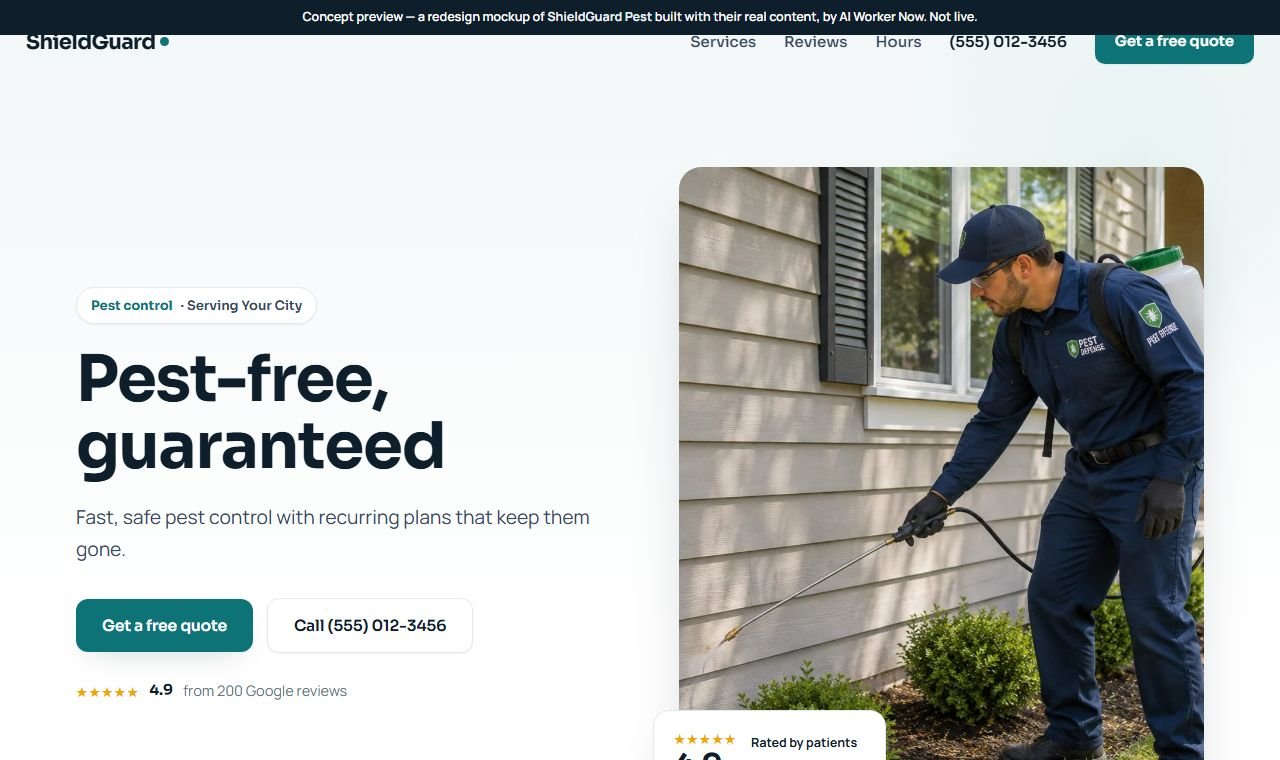
What It Really Takes to Start a Pest Control Business
Pest control is one of those trades that rewards people who like solving problems and don't mind getting their hands dirty. The work is steady because bugs and rodents don't take seasons off. Homes, restaurants, warehouses, and apartment buildings all need help, and most of them need it on a recurring basis. That recurring revenue is what makes this business attractive.
What it really takes is a mix of three things: technical skill, a license, and the willingness to knock on doors and answer the phone. You don't need a fancy office or a fleet of trucks on day one. Many successful operators start with one vehicle, a solid set of tools, and a service area they know well.
You also need a stomach for the work. That means crawling under houses, inspecting attics, and dealing with customers who are stressed out about an infestation. If you can stay calm, explain things clearly, and show up when you say you will, you're already ahead of a lot of the competition.
One more thing: this is a trust business. People are letting you into their homes and businesses. How you present yourself, how you answer the phone, and how you follow up matter as much as the chemicals you use.
A Simple Step-by-Step to Launch
Start by checking your state's requirements for pest control licensing. Most states require a certified applicator license, and some require a separate business license on top of that. Get this sorted before you spend money on anything else, because the rules shape everything that follows.
Next, decide what services you'll offer first. A common starting point is general household pest control: ants, roaches, spiders, and rodents. You can add termite work, bed bugs, or wildlife removal later once you have steady cash flow and the right certifications.
Then handle the basics of setting up a business:
- Register your business name and entity with your state
- Get a business bank account and basic liability insurance
- Buy or lease a reliable vehicle you can wrap or letter
- Stock your initial equipment and products from a licensed supplier
- Set up a simple way to take payments and schedule jobs
Once that's done, pick a service area and set your prices. Call a few competitors in nearby towns and ask what they charge for a standard quarterly treatment. You don't have to match them, but you should know the range so you're not leaving money on the table or pricing yourself out of work.
Finally, get your first jobs however you can. Friends, family, local Facebook groups, and small property managers are all fair game. The goal in month one is not perfection. It's getting reps, learning your routes, and proving to yourself that people will pay you.
Typical Startup Costs and Licenses to Look Into
Startup costs vary a lot depending on whether you buy new equipment or used, and whether you already own a vehicle. As a general range, most solo operators spend somewhere between a few thousand dollars and fifteen thousand dollars to get going. The biggest line items are usually your vehicle, your initial chemical and equipment stock, insurance, and licensing fees.
On the license side, here are the things to look into. Check with your state's department of agriculture or structural pest control board, since that's usually who oversees applicator licensing. Ask about:
- Certified applicator or technician license
- Business license and any required bond
- General liability and commercial auto insurance
- Local city or county permits, if any
- Continuing education requirements to keep your license active
Every state is different, and some cities add their own rules on top. Don't guess. Call your state office and your city business license department and ask directly. It takes an afternoon and saves you a world of trouble later.
How to Land Your First Customers
Your first customers almost always come from people who already know you. Tell everyone you know what you're doing. Hand out cards at your gym, your church, your kid's school. Offer a simple introductory rate for a first treatment, and be clear that ongoing service is where the real value is.
Then branch out. Small property management companies, real estate agents, and restaurant owners are great targets because they need reliable service and they talk to each other. A single apartment complex or restaurant chain can keep you busy for years.
Do good work and ask for reviews. Ask every happy customer to leave you a review on Google. Those reviews do more for a new pest control business than almost any ad you can buy, because people searching for help trust other people's experiences more than they trust your own sales pitch.
Keep in touch with past customers too. A simple reminder that it's time for their quarterly treatment brings back revenue you already earned once. Recurring customers are the backbone of a stable pest control business.
Common Mistakes That Sink New Pest Control Businesses
The most common mistake is underpricing. New operators often charge too little to win the job, then can't cover their costs when a callback or a tough infestation eats up their day. Price for the work it actually takes, not the work you hope it takes.
Another big one is skipping the paperwork. No license, no insurance, no receipts. That works until it doesn't, and one accident or complaint can end the business overnight. Stay legal from day one.
Poor follow-up kills a lot of new companies too. If a customer calls and you don't answer or call back within a day, they move on to the next name on the list. Set up a simple system so no call or message falls through the cracks.
Finally, don't try to do everything at once. Operators who offer twenty services in month one usually do none of them well. Pick a lane, get good at it, and expand once you have steady customers and steady income.
Why Being Easy to Find Online Turns Calls Into a Steady Stream
Here's the part a lot of new pest control owners miss. You can be the best technician in your area and still stay slow if nobody can find you. When someone has ants in the kitchen or a mouse in the garage, they don't ask around for a week. They pull out their phone and search. If you're not there, you don't get the call.
That's why a real website matters. Not a social media page, not a free listing, but an actual site with your services, your service area, your phone number, and a way to request a quote. It's the home base for everything else you do online.
Google is where most of those searches start. A complete Google Business Profile with your hours, photos, and reviews puts you on the map when people search for pest control near them. Reviews are a huge part of this. A steady flow of recent, positive reviews tells both Google and your future customers that you're active and trustworthy.
AI search is the newer piece. More people are asking tools like ChatGPT for recommendations, things like "best pest control company in my area" or "how do I get rid of roaches for good." These tools pull from websites, reviews, and directory listings to form an answer. If your business has a clear website, consistent listings, and real reviews, you're far more likely to show up in those answers. If you're invisible online, you're invisible there too.
Put together, this is what turns a new pest control business from a hustle into a steady stream of calls. A real website, a strong Google presence, and enough reviews to earn trust mean people find you when they need you, instead of finding your competitor. The work is the same either way. Being easy to find is what keeps the phone ringing.
Common questions
Do I need a license to start?
Usually yes, and it varies by state and city. Check your local requirements for a pest control business before your first job. A good rule is to sort licensing and insurance before you take money.
How do I get my first customers?
Start with people who already trust you, do a few jobs well, and ask every happy customer for a Google review and a referral. Then make sure you show up online so new customers can find you.
How long until a website brings in calls?
A new site can start getting found within weeks, and it keeps compounding. The fastest wins are a complete Google Business Profile and fresh reviews.
More guides
Ready to get found? See what is costing you customers online, free.
Scan your site free