 AI Worker Now
How to start and grow a water and fire damage restoration business
What it takes, how to launch, what it costs, how to land your first customers, and how to get found so the calls keep coming.
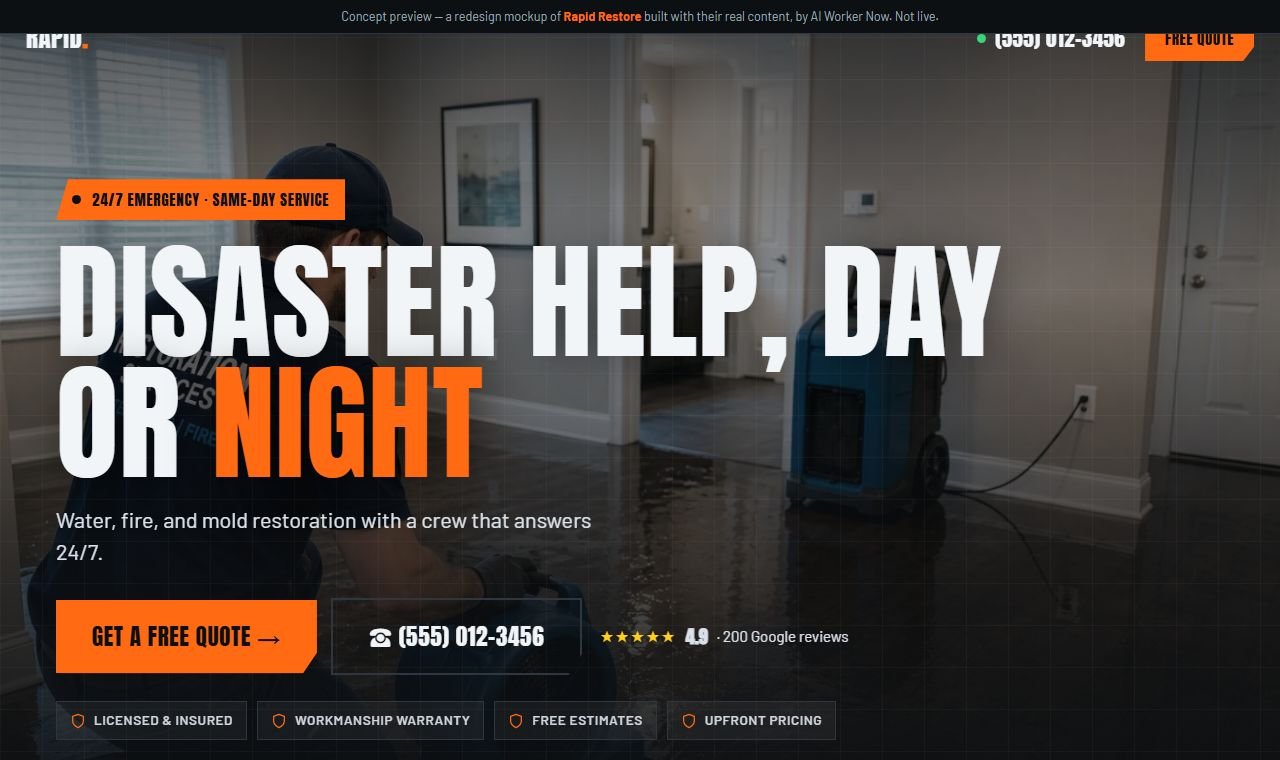
What It Really Takes to Start
Water and fire damage restoration is a service business built on trust, speed, and follow-through. When someone's basement floods at 2 a.m. or a kitchen fire leaves smoke damage throughout the house, they are scared and they need help fast. If you can answer the phone, show up, and explain the process in plain language, you already have an edge over half the competition.
This is not a business for someone who wants to sit behind a desk. You will crawl through wet crawlspaces, haul out soaked drywall, run drying equipment for days, and deal with insurance adjusters who want everything documented. The work is physical and the hours can be long, especially during storm season.
On the plus side, demand never disappears. Pipes burst, appliances leak, storms roll through, and fires happen. Homeowners rarely shop around for the cheapest option in an emergency. They hire the company that answers first and sounds like they know what they are doing. That combination of steady demand and urgency is why so many restoration companies grow quickly once they get their name out.
You do not need to be a master plumber or a fire investigator. You need to understand the drying science, know how to document a job for insurance, and be honest with people on the worst day of their year. Everything else can be learned or hired.
A Simple Step-by-Step to Launch
Start by learning the trade before you sell it. Work for an established restoration company for a year or two if you can. You will learn how to scope a loss, set up air movers and dehumidifiers, write an estimate in industry software, and talk to adjusters. That experience is worth more than any course.
Next, get your paperwork in order. Register your business, get an EIN, open a business bank account, and line up general liability insurance plus the coverage your state requires for contractors. Talk to an accountant about how you will track job costs, because restoration jobs live and die on margins.
Then build your basic kit. You need water extraction equipment, air movers, dehumidifiers, moisture meters, PPE, and a truck or trailer to move it all. You can buy used to start and upgrade as revenue allows. Many new owners begin with water damage only and add fire and smoke work later.
Once you have gear and insurance, set up your systems. Get a business phone number that forwards to your cell, a simple job management tool, and a website. Write down your process for answering a call, dispatching, documenting, and invoicing. A written process keeps you from dropping the ball when three jobs come in at once.
Finally, start small and local. Take jobs within a reasonable driving radius, do them well, and ask every happy customer for a review and a referral. Your first fifty jobs will teach you more than any business plan.
Typical Startup Costs and Licenses to Look Into
Costs vary widely by region and by how much equipment you buy versus rent. A lean start with a used truck, basic water extraction and drying gear, insurance, and a simple website can land in the range of $15,000 to $40,000. A more complete setup with a dedicated vehicle, a full equipment inventory, and fire and smoke gear can run $60,000 or more. Add working capital for payroll, fuel, and equipment maintenance, because insurance payments often arrive weeks after you finish a job.
Licensing is where you need to slow down and check your own state and city. Most places require a general contractor or specialty contractor license for restoration work, and the rules differ from state to state. You may also need a mold remediation license or certification, since water damage and mold go hand in hand. Many states require asbestos and lead certification for work on older homes.
Beyond licensing, look into business registration, a sales tax permit if you sell materials, workers compensation if you hire, and any local permits for hauling debris. Industry certifications from organizations like the IICRC carry weight with insurers and customers, even where they are not legally required. Call your state contractor board and your city business office and ask directly what applies to you. It is a short phone call that saves a lot of trouble.
How to Land Your First Customers
Your first customers usually come from people who already know you. Tell everyone you know what you do. Realtors, property managers, plumbers, and insurance agents are the four groups that send restoration work again and again. A plumber who fixes a leak will happily hand your card to the homeowner if you make it easy and pay promptly for referrals where that is allowed.
Build relationships with local insurance adjusters. They want contractors who document well, communicate clearly, and do not inflate claims. Do a few jobs the right way and you become the name they call.
Ask for reviews after every job. A steady flow of Google reviews is the single most powerful trust signal for a new restoration company, because people searching at 1 a.m. are looking for proof that you are real and reliable.
Do not forget the basics: a clean truck with your name on it, business cards, and a professional phone greeting. In this business, the company that answers the phone wins the job. Missed calls are missed money.
Common Mistakes That Sink New Businesses
The biggest mistake is poor documentation. If you cannot show moisture readings, photos, and a clear scope of work, the insurance company will cut your payment or deny it. Document everything, every visit.
Another common failure is undercharging. New owners guess at prices and lose money on jobs that take longer than expected. Use industry estimating software and price your work based on real costs, not what you hope the customer will pay.
Many new companies also try to do everything at once. Water, fire, mold, asbestos, reconstruction, contents cleaning. Pick one or two services, get good at them, and expand later.
Cash flow kills more restoration startups than lack of work. You pay for equipment, labor, and fuel now, and you get paid in thirty to sixty days. Keep a cash cushion and invoice immediately.
Finally, do not neglect your online presence. A new restoration company with no website and no reviews looks like a stranger, and nobody invites a stranger into their flooded home.
Why Being Easy to Find Online Turns Calls Into a Steady Stream
When water is pouring through a ceiling, people do not ask friends for recommendations. They grab their phone and search. They search on Google, and increasingly they ask an AI assistant like ChatGPT for the best restoration company nearby. If you are not visible in those places, you do not exist to that customer.
A real website is your foundation. It should load fast, say clearly what you do and where you serve, show your license and insurance, and make your phone number impossible to miss. Add pages for each service and each town you cover, because that is what helps you show up in local searches.
Google Business Profile matters just as much. Fill it out completely, add photos of your team and equipment, list your hours, and collect reviews. Most emergency searches happen on a phone, and the map results get the first calls.
AI search is the newer piece. Tools like ChatGPT pull from websites, reviews, directories, and local listings to answer questions like "who does water damage restoration near me." The businesses that get mentioned are the ones with clear, consistent information across the web. That means one correct name, address, and phone number everywhere, plus useful content on your site that answers real questions.
Put these three together, a solid website, a strong Google presence, and clean information that AI tools can read, and your phone starts ringing without you chasing every lead. That is how a new restoration company stops being a side hustle and becomes a steady stream of calls.
Common questions
Do I need a license to start?
Usually yes, and it varies by state and city. Check your local requirements for a water and fire damage restoration business before your first job. A good rule is to sort licensing and insurance before you take money.
How do I get my first customers?
Start with people who already trust you, do a few jobs well, and ask every happy customer for a Google review and a referral. Then make sure you show up online so new customers can find you.
How long until a website brings in calls?
A new site can start getting found within weeks, and it keeps compounding. The fastest wins are a complete Google Business Profile and fresh reviews.
More guides
Ready to get found? See what is costing you customers online, free.
Scan your site free